Unlocking the Mysteries of Pyrrhotite: The Magnetic Mineral Fe1-xS

Imagine holding a rock that seems ordinary at first glance but hides within it a magnetic personality that has fascinated geologists and material scientists for decades. That’s pyrrhotite—a mineral with a chemical formula often expressed as Fe1-xS, where x denotes a variable iron deficiency. This subtle variation in iron content leads to fascinating and complex magnetic properties that have both intrigued researchers and challenged engineers. If you’ve ever pondered the unseen forces lurking in the minerals beneath your feet or wondered how the magnetic behavior of certain rocks can impact industrial applications, you’re about to embark on a journey that demystifies pyrrhotite and its many facets.
Why Understanding Pyrrhotite Matters More Than You Think
For many, minerals are just geological curiosities, but pyrrhotite stands out as a mineral that’s both scientifically rich and practically significant. The pyrrhotite mineral is notorious in the construction industry for its ability to cause damage due to its magnetic and expansive properties. Buildings constructed on pyrrhotite-rich ground can suffer from cracking foundations, which has led to costly repairs and increased attention to this mineral. Yet, beyond these challenges, the mineral’s unique Fe1-xS composition opens a window into intriguing magnetic phenomena that make it a subject of ongoing research. no deposit football bet
Digging deeper, the magnetic pyrrhotite isn’t just a nuisance—it’s a natural laboratory for exploring the relationships between composition, structure, and magnetic behavior. This is where the story takes an interesting turn. Have you ever come across the term “no deposit football bet” in an unrelated context and wondered how seemingly unrelated topics can unexpectedly converge? Just as a no deposit football bet offers a risk-free way to engage with the excitement of soccer betting, studying pyrrhotite provides a no-loss opportunity to uncover magnetic surprises hidden in the Earth’s crust. Both invite exploration with low upfront risk but the promise of revealing something valuable or fascinating.
Unpacking Pyrrhotite Properties: What Makes Fe1-xS So Magnetic?
At the heart of pyrrhotite’s allure lies its chemical formula Fe1-xS, where the iron content fluctuates. This slight deficiency in iron atoms creates vacancies in the crystal lattice, which dramatically influences the mineral’s magnetic properties. Unlike many minerals that are either weakly magnetic or not magnetic at all, pyrrhotite displays a range of magnetism depending on its exact stoichiometry. This variability is why scientists often describe it as a “magnetic pyrrhotite” to emphasize the phases where magnetism is most pronounced.
But what does this mean in practical terms? For one, the magnetic behavior impacts geophysical surveys. Pyrrhotite-rich rocks can cause anomalies in magnetic field measurements, which must be accounted for when exploring for mineral deposits or studying tectonic processes. It also means that pyrrhotite can be a natural marker in understanding the thermal and chemical history of the rocks in which it forms.
Key Pyrrhotite Properties at a Glance
- Composition: Iron-deficient sulfide with formula Fe1-xS, where 0 ≤ x ≤ 0.2
- Magnetism: Exhibits ferrimagnetism, with strength linked to iron vacancy concentration
- Crystal Structure: Monoclinic or hexagonal depending on composition and temperature
- Industrial Impact: Causes structural damage due to expansion and chemical reactions
- Geophysical Role: Influences magnetic surveys due to its natural magnetism
Understanding these properties not only aids geologists in fieldwork but also helps engineers and environmental scientists mitigate the risks associated with pyrrhotite mineral deposits. The challenge lies in accurately identifying and quantifying pyrrhotite in rock samples—a task easier said than done, given its variable composition and subtle magnetic signatures.
Why Pyrrhotite Continues to Captivate Researchers and Industry Experts
Despite decades of study, pyrrhotite still holds secrets that drive scientists to push the boundaries of mineralogy and magnetism. Its intriguing Fe1-xS formula means it can serve as a natural example of non-stoichiometric compounds—materials that don’t have fixed ratios of their constituent elements. This makes pyrrhotite a perfect case study in solid-state chemistry and condensed matter physics.
Moreover, with the rise of new technologies, the demand for materials with specific magnetic properties has surged, bringing minerals like pyrrhotite into sharper focus. While it may not be the star of electronic devices, understanding its magnetic pyrrhotite phases helps refine the broader science that underpins magnetic materials research.
By the end of this article, you’ll be equipped with a clear understanding of what pyrrhotite is, why its Fe1-xS formula matters, and how its magnetic and structural properties influence both natural processes and human endeavors. Whether you’re a geology student, a construction professional, or simply a curious mind fascinated by the hidden powers of minerals, the following sections will illuminate the many layers of pyrrhotite’s identity.
Understanding Pyrrhotite: Key Questions and In-Depth Answers
What is Pyrrhotite and Why is it Important?
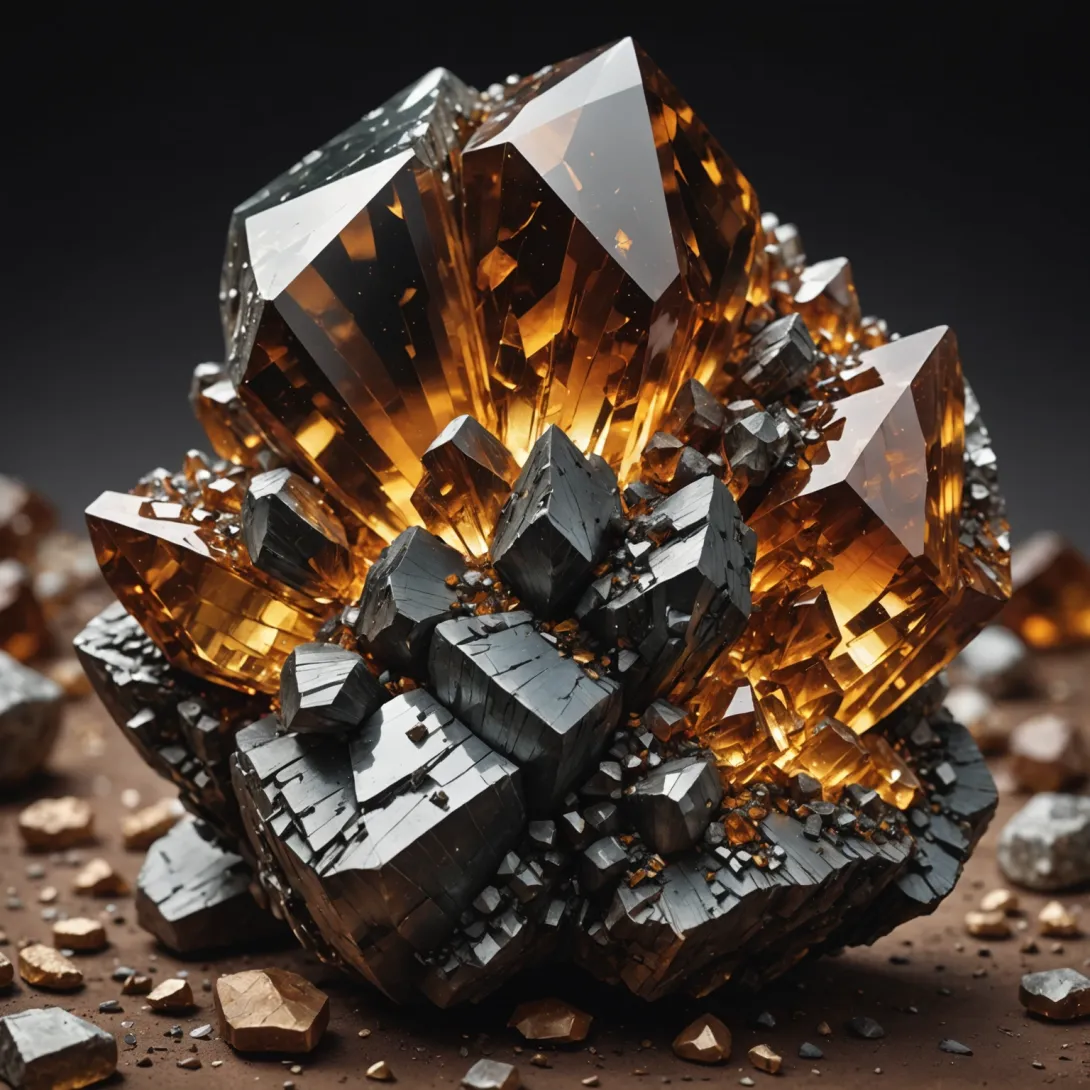
Pyrrhotite is a naturally occurring iron sulfide mineral, often recognized by its metallic luster and bronze or brownish color. It is a significant mineral in geology and mining due to its magnetic properties and association with valuable ore deposits.
As a pyrrhotite mineral, it has a general chemical formula of Fe1-xS, where "x" represents the iron deficiency, commonly ranging between 0 and 0.2. This iron deficiency makes pyrrhotite unique compared to other iron sulfides like pyrite (FeS2).
Understanding pyrrhotite is crucial because it can impact construction materials, mining operations, and environmental assessments. For example, pyrrhotite's presence in concrete aggregates can cause structural damage over time due to its reactive properties.
What Does Fe1-xS Mean in the Context of Pyrrhotite?
The notation Fe1-xS refers to the variable iron content in the pyrrhotite crystal structure. "Fe" stands for iron, "S" for sulfur, and "x" indicates the iron deficiency, which can vary in the mineral's composition.
This variability in iron content affects the physical and magnetic properties of the mineral, leading to different forms or polytypes of pyrrhotite. The iron deficiency also influences its stability and reactivity, which is why understanding the Fe1-xS formula is essential for mineralogists and engineers dealing with pyrrhotite-containing materials.
What Are the Key Pyrrhotite Properties?
The pyrrhotite properties make it distinctive among sulfide minerals. Here are some of its key characteristics:
- Magnetism: Pyrrhotite is naturally magnetic, unlike many other sulfide minerals. This is due to its iron deficiency and crystal structure, which allows unpaired electrons to align and create a magnetic field.
- Color and Luster: Typically bronze to brownish, with a metallic or sub-metallic luster.
- Crystal Structure: Monoclinic or hexagonal system, depending on the iron content (Fe1-xS composition).
- Hardness: On the Mohs scale, pyrrhotite typically ranges from 3.5 to 4.5.
- Density: Around 4.58 to 4.65 g/cm³, depending on the exact composition.
- Reactivity: Pyrrhotite can oxidize and produce sulfuric acid when exposed to air and moisture, contributing to acid mine drainage in mining environments.
These properties not only define pyrrhotite’s identity but also determine its industrial and environmental impacts.
Is Pyrrhotite Magnetic? How Does Magnetic Pyrrhotite Affect Its Uses?
Yes, magnetic pyrrhotite is one of the distinctive features of this mineral. The degree of magnetism depends on the iron deficiency in the Fe1-xS structure; the less iron present, the stronger the magnetic behavior generally observed.
This magnetic property is utilized in geophysical exploration to identify sulfide ore bodies. Magnetic surveys can detect the presence of pyrrhotite in the subsurface, helping mining companies locate deposits of nickel, copper, and other economically important metals often associated with pyrrhotite.
However, magnetic pyrrhotite can be a double-edged sword. In the construction industry, its presence in aggregates can lead to challenges. The mineral's magnetic and reactive nature can cause degradation in concrete, leading to structural issues over time. This has been a significant concern in regions where pyrrhotite-containing rock is used for building materials.
Where is Pyrrhotite Commonly Found and How is it Used?
Pyrrhotite mineral deposits are commonly found in mafic igneous and metamorphic rocks. Notable occurrences include the Sudbury Basin in Canada, the Bushveld Complex in South Africa, and various parts of Scandinavia. These regions are also known for their rich deposits of nickel, copper, and platinum group metals, often mined alongside pyrrhotite.
Uses of pyrrhotite include:
- Indicator mineral in mining exploration for sulfide ore bodies.
- Source of iron and sulfur in some industrial processes, though less common than other iron ores.
- Geological and environmental studies, especially related to acid mine drainage and rock weathering.
What Are the Environmental and Engineering Concerns Related to Pyrrhotite?
One of the major concerns with pyrrhotite is its potential to cause damage when present in construction materials. The oxidation of pyrrhotite in concrete aggregates leads to expansion and cracking, compromising structural integrity.
Additionally, the oxidation process releases sulfuric acid, leading to acid mine drainage (AMD) in mining environments. AMD can severely impact local ecosystems by lowering pH and releasing heavy metals into waterways.
Mitigation strategies include:
- Careful mineralogical testing of aggregates before use in construction.
- Implementing environmental controls at mining sites to manage acid drainage.
- Research into alternative materials or treatment methods to neutralize pyrrhotite’s reactive effects.
Summary: Why Understanding Pyrrhotite Matters
Pyrrhotite is more than just an iron sulfide mineral. Its unique Fe1-xS composition and magnetic properties make it a subject of interest across geology, mining, environmental science, and engineering. Understanding pyrrhotite properties helps professionals anticipate challenges related to mining, construction, and environmental impact.
By recognizing the characteristics of magnetic pyrrhotite and the implications of iron deficiency in the Fe1-xS formula, industries can make informed decisions about resource extraction, material use, and site management. Overall, pyrrhotite is a fascinating mineral with both valuable applications and significant considerations.


